Introduction (Badshahi Mosque Travel Review & Guide)
When I visited Lahore for the first time, there was only one place that attracted me the most – Badshahi Mosque Lahore, or as it is called in Urdu as Badshahi Masjid. To be honest, Lahore is a cultural hub for tourists travelling from all over the world, but the feeling I got after coming here, was probably not possible anywhere else.
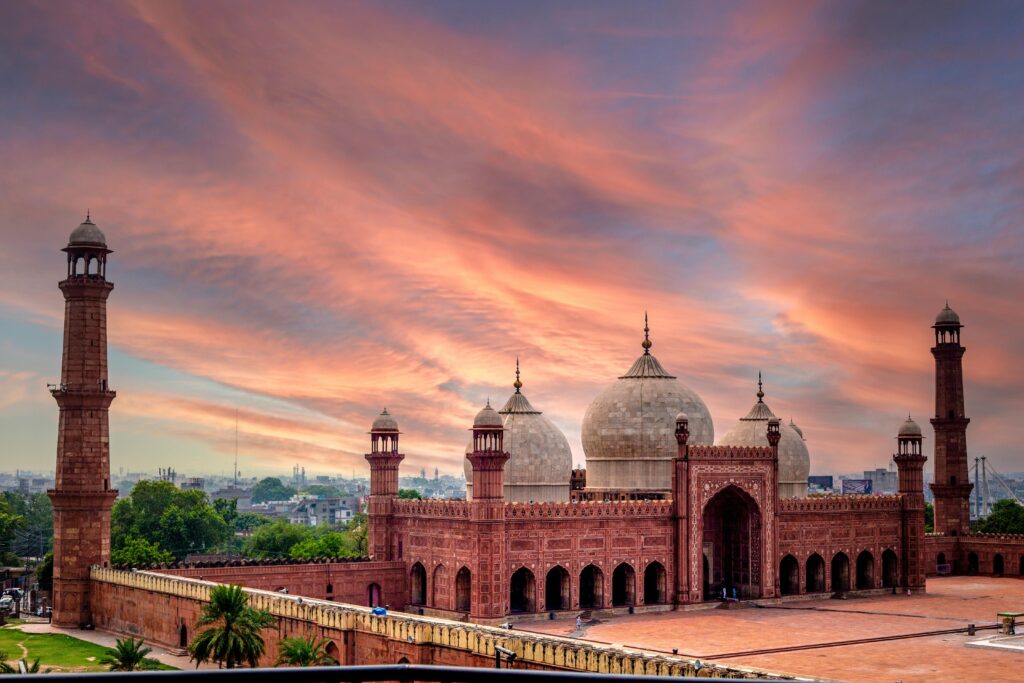
I see many friends from UK and Europe travelling and they always say that if there is any place in Asia where one can experience real Mughal history, royal architecture and live culture together, it is Lahore. And the most shining jewel of Lahore is Badshahi Mosque Pakistan.
I remember when I went towards Badshahi Mosque in the Walled City Lahore on the first day, its massive red sandstone walls attracted me from the door itself. I felt as if I had time travelled and gone to the Mughal era. This mosque was built in 1673 by Emperor Aurangzeb, and is considered a masterpiece of Mughal architecture.
This mosque stands tall right in front of Lahore Fort, near Hazuri Bagh. When you stand in front of it, only one thought comes to mind: “How could such a big and perfect structure have been built in those days without modern technology?”
Even from a tourist point of view, Badshahi Mosque tourist information is available everywhere, but the real feel is only when you visit it yourself. I would especially like to say to the audiences from UK and USA that if you are visiting Pakistan, do not miss Lahore and then Badshahi Mosque. It is not just a religious site but a cultural experience that makes you feel both the history of the Mughal empire, Islamic art and the spirit of Lahore.
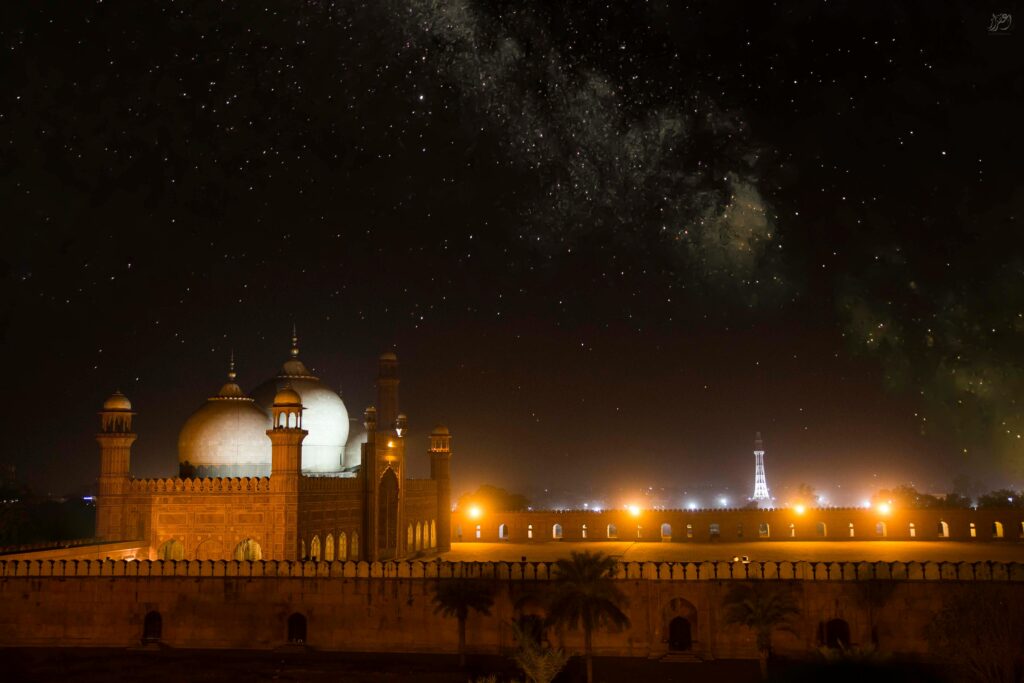
For me the most special moment was when I saw the night view of the mosque. When this mosque is dazzling under the yellow lights, it becomes the best spot for photography. And if you come here on the day of Eid, the atmosphere of Eid at Badshahi Mosque becomes an unforgettable memory.
This introduction part is just a glimpse. Next I will tell you about my complete experience, history of the mosque, detailed architecture, Badshahi Mosque entry fee, timings, travel tips and festivals in detail.
History of Badshahi Mosque
If you consider the history of Lahore as a book, then the most golden chapter of that book is Badshahi Mosque Lahore. This is one of the most iconic mosques not only of Pakistan but of the entire Islamic world. When I personally visited this place and heard the talks from the guide, I realized that every stone, every minaret and every courtyard here has its own unique past.
Foundation of Badshahi Mosque
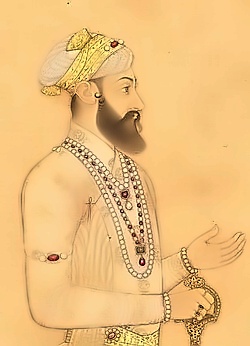
Badshahi Mosque was built in 1673 by the great Mughal emperor Aurangzeb Alamgir. At that time the Mughal Empire was at its peak. Aurangzeb had a vision to build a mosque which would not only be a symbol of Lahore but also establish it forever as a living monument of Islamic power and Mughal architecture.
When I stepped inside the mosque, my guide told me that Aurangzeb had specially built this mosque to showcase the religious strength of his empire. Badshahi Masjid was, in a way, a “statement of faith and power” of the Mughal empire.
Mughal Architecture Badshahi Mosque
The design of this mosque is one of the finest example of Mughal architecture. When viewed from the door, it resembles Jama Masjid Delhi, which was built by Aurangzeb’s father Shah Jahan. But the Badshahi Mosque is unique because of its size and grandeur.
The foundation of the mosque was laid right in front of Lahore Fort. Aurangzeb wanted the mosque and the fort to give the feel of a single royal complex. Therefore, when you see Lahore Fort and Badshahi Mosque in one frame, you understand how advanced was the town planning and vision of the Mughal rulers at that time.
Construction Details (1673)
- Construction officially began in 1671 and was completed in 1673.
- Red sandstone was used to build the mosque, which was specially brought from Rajasthan.
- Minarets and domes were decorated with marble and precious stones.
When the guide told me these numbers, my mind was honestly blown. Think, such a grand structure must have been built 350 years ago without cranes and machines.
British Rule and Damage
When the British Raj took control of the subcontinent, unfortunately the Badshahi Mosque suffered a lot. The British used the mosque as a military barracks and storage. Horses were tied in the courtyard and the sacred areas inside were converted into ammunition depots.
When I saw the restoration history of the mosque, I was deeply saddened that such a sacred place was degraded in this way. But at the same time I was proud that the people and Muslims of Lahore restored it and today it stands in its full glory.
Restoration of Badshahi Mosque
In the 20th century, the Government of Pakistan started restoring the mosque. In 1939, Sikandar Hayat Khan started a restoration project that continued for decades. The beauty you see today is mainly the result of this restoration.
UNESCO also considers this mosque a priceless heritage site. For this reason, even today UNESCO is taking multiple initiatives to preserve Badshahi Mosque.
Historical Significance
- Badshahi Mosque was a symbol of Mughal power.
- It is the biggest part of Lahore’s identity.
- When Pakistan was formed, this mosque was officially declared a national heritage in the 1950s.
- Even today, there is a picture of Badshahi Mosque on Pakistani currency note, which shows its national importance.
My Feelings During the Tour
When I was standing in the courtyard and was thinking that even 350 years ago people used to offer Namaz here, celebrate Eid, and Mughal emperors used to attend prayers here – a strange feeling of goosebumps came. Looking at the Quranic calligraphy on the walls inside the mosque, it seems as if those days are still alive.
Summary of History
- Built in 1673 by Aurangzeb
- Finest example of Mughal architecture
- Faced destruction in British Raj
- Restored in 20th century
- Today UNESCO heritage and pride of Pakistan
Architecture and Design
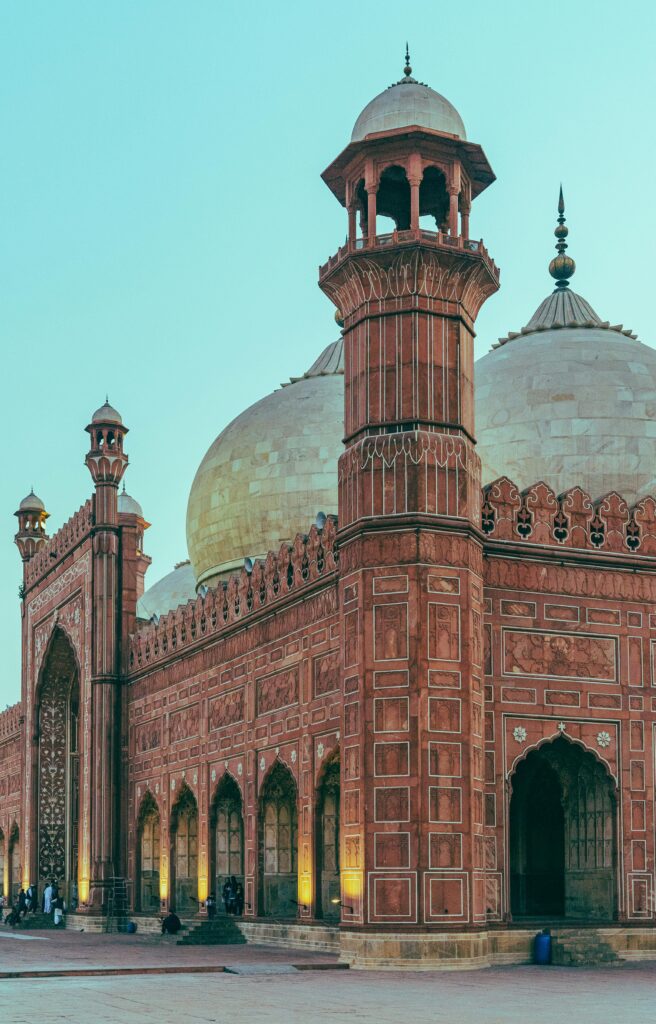
If I say honestly then the most impressive part of Badshahi Mosque Lahore is its architecture. When you stand in front of the mosque, at the first glance itself you feel that this is not an ordinary mosque but a masterpiece which shows the glory and power of the Mughal empire.
Exterior Design
The Badshahi Masjid is built of red sandstone which was brought from Rajasthan. There are 4 huge minarets at all four corners of the mosque which are 176 feet high. These minarets are so wide that one can climb up them by climbing stairs.
When I personally saw these minarets, it seemed that these are not just an architectural design but the crown of Lahore’s skyline.
Domes and Prayer Hall
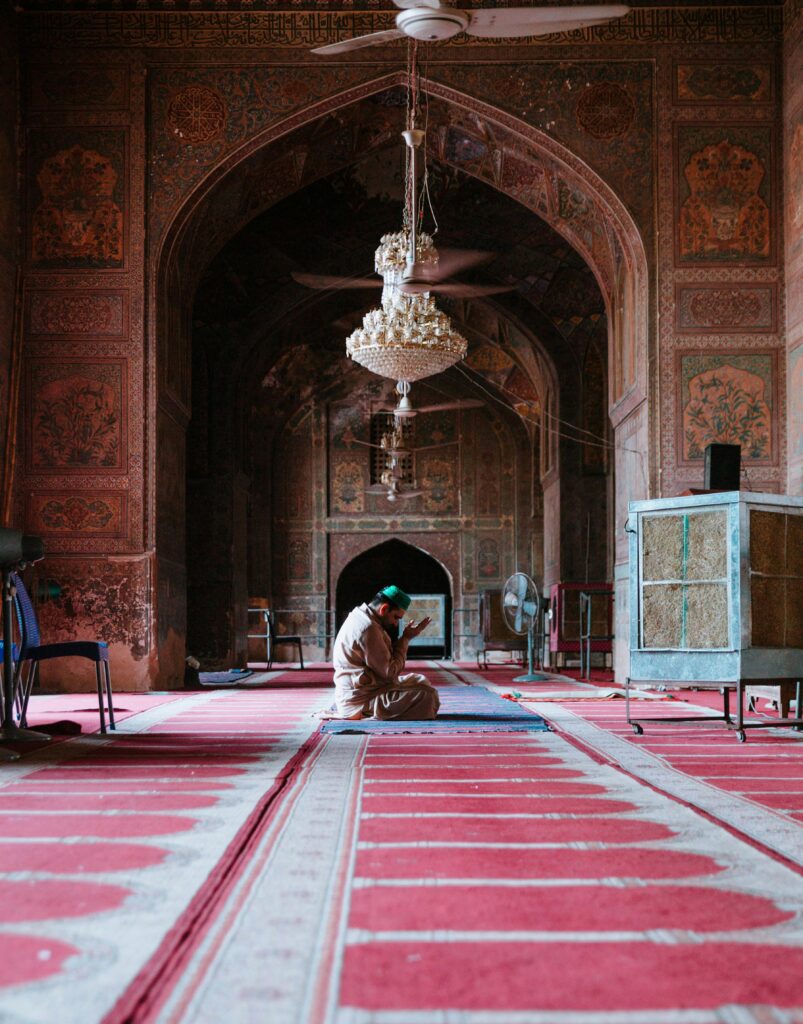
In front of the main entrance, there is a huge prayer hall which has 3 marble domes. These domes are a classic feature of Mughal architecture. The contrast of white marble and red sandstone gives the mosque an even more royal look.
The walls inside the prayer hall are decorated with Quranic calligraphy and floral designs. When I went inside, I felt as if I had entered a living museum.
Courtyard
The courtyard of Badshahi Mosque is considered to be the largest courtyard in the world which is near any mosque. 100,000 people can offer namaz here at a time. On the day of Eid, this entire courtyard is filled and a breathtaking scene is created.
Connection with Lahore Fort and Hazuri Bagh
The location of the mosque is also an important part of the design. It is built right in front of Lahore Fort and near Hazuri Bagh. Mughal rulers built it in such a way that both the fort and mosque complement each other.
Artistic Touch
- Unique combination of red sandstone + white marble
- Calligraphy of Quranic verses
- Mughal floral patterns
- Symmetrical design that beats the standards of architecture of that time
Overall I feel that Badshahi Mosque is a perfect example of Mughal architecture and how art and religion blend together. This mosque is not just a place of worship, but a piece of art that has been built for 350 years and even today looks as majestic as it probably did on the day it was completed in 1673.
Short but powerful conclusion:
“The architecture of Badshahi Mosque is a royal statement that even today impresses every tourist. Its exterior, domes, minarets and vast courtyard are proof of the craftsmanship of the Mughal era.”
Personal Travel Experience at Badshahi Mosque
When I first visited Badshahi Mosque, my excitement was at its peak. When its minarets are visible from the door, there is a different feeling. After crossing the crowded streets of the walled city, when you suddenly stand in front of this grand mosque, it feels like you have stepped into the Mughal era.
Badshahi Mosque Entry Fee and Timings
First of all, let’s talk about practical things – the good news is that Badshahi Mosque entry fee is zero, which means you don’t have to pay any money. It is an open place of worship and anyone can visit here for free.
Badshahi Mosque timings are almost from morning to evening, and you can spend some time in the courtyard even after Maghrib. But it is best to visit during the day so that you can see the full beauty of the mosque clearly.
First Impressions
When I stepped inside the gate and saw the big courtyard, I am telling you the truth – my heart was filled with joy. I had never seen such a large and symmetrical space before. The sense of calm and a spiritual vibe that I felt there is perhaps difficult to explain in words.
Badshahi Mosque Photography and Night View
If you are fond of photography then Badshahi Mosque is a heaven. During the day the red sandstone and white domes shine in the sunlight, and at night the mosque has a royal charm under the yellow flood lights.
I myself captured the Badshahi Mosque view at night, and believe me – that picture is one of my favourite shots till date.
Festivals and Eid at Badshahi Mosque
I got a chance and went to the courtyard of the mosque on the day of Eid ul Fitr. Lakhs of people had gathered there for Namaz, and it was a scene of unity and brotherhood, it became a life time memory. Eid at Badshahi Mosque is literally like a festival – people are wearing new clothes, families are together, and there is a spiritual energy inside the mosque that you do not feel anywhere else.
Travel Tips from My Experience
- Visit in the morning or late afternoon, light is best.
- Wear comfortable shoes, as the courtyard is quite hot.
- If you are a non-Muslim, it is important to wear modest dress.
- Carry a tripod for photography, especially for night view.
Cultural and Religious Importance of Badshahi Mosque
Badshahi Masjid Lahore is not just a building – it is a cultural and spiritual symbol.
Religious Importance
- Since the 17th century, this mosque has been the main center of Friday prayers and Eid prayers.
- The capacity to accommodate 100,000 worshippers at a time puts this mosque among the largest mosques in the world.
- Even today people from every corner of Pakistan come here on Eid and special occasions.
Cultural Significance
- The name of Badshahi Mosque is associated with the identity of Lahore. If a tourist comes to Lahore from UK, USA or Europe and does not see this mosque, the trip remains incomplete.
- Tourists, photographers, students and local families are always seen in the courtyard and stairs of the mosque. It has become a part of the social life of Lahore.
- Festivals like Milad, Eid and national days are celebrated in Badshahi Mosque where people come not only for prayers but also to feel the culture and unity.
Badshahi Mosque on Pakistani Currency
Another important thing is that Badshahi Mosque is also printed on Pakistani currency notes. This is proof that this mosque is not just a symbol of Lahore but is a part of the national identity of the whole of Pakistan.
UNESCO and World Heritage Value
UNESCO has considered Badshahi Mosque as a priceless heritage. The combination of its location inside the Walled City and the Mughal architecture makes it one of the world’s top cultural landmarks.
Conclusion of These Sections
For me personally, Badshahi Mosque was a place where I felt culture, religion, history and beauty all together. Its grandeur during the day, its charm during the night and its spiritual environment during Eid – all are different and unforgettable experiences. It is the essence of Lahore and the pride of Pakistan.
Tourist Guide Section – Badshahi Mosque
If you are planning to visit Lahore, then this Badshahi Mosque tourist information guide based on my personal experience will be of great help to you.
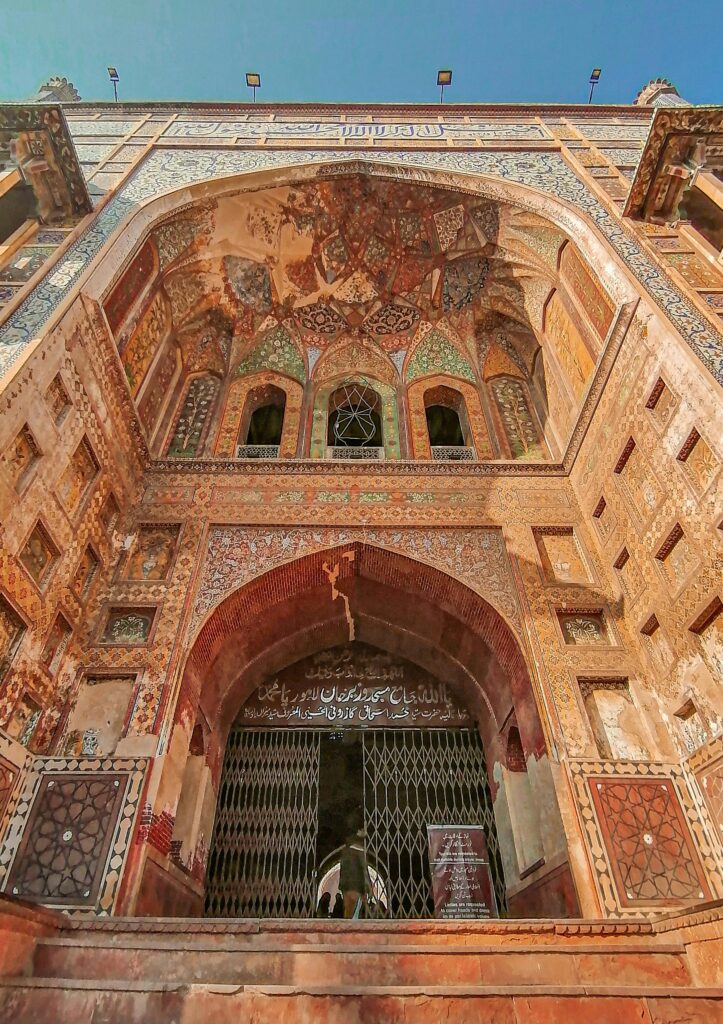
How to Reach Badshahi Mosque
- From Lahore Airport: You can reach Badshahi Mosque directly by Taxi or Careem/Uber. Travel time takes approximately 40-50 minutes, depending on traffic.
- From Lahore Railway Station: It is hardly a 15-minute ride. Rickshaws are also easily available and it is a fun experience.
- From Mall Road: This area is the city center. The mosque is a 10-12 minute drive from there.
“Since Badshahi Mosque is located in the heart of the Walled City, you should not miss other attractions from my list of the Best Places to Visit in Lahore”
Badshahi Mosque Visiting Hours
- It is open from morning till Maghrib.
- It is also open for prayers during Fajr and Isha, but tourists usually visit during the day.
- Best visiting hours: Early morning (crowd is less) or late afternoon (sunset view is amazing).
Best Time to Visit Badshahi Mosque
- Winter (Nov – Feb): Perfect weather, clear skies, and cool breeze.
- Spring (March – April): Walking in the Courtyard is comfortable.
- Summer (May – Aug): It is very hot during the day, so morning or evening is best.
- Eid days: If you want a cultural experience, visit on Eid day. But be prepared for huge crowds.
“If you are planning your trip around seasons, you can also check my detailed guide on the Best Time to Visit Lahore for International Tourists in 2025”
Nearby Attractions
The Badshahi Mosque is a wonder in itself, but there are other gems around it that should not be missed:
- Lahore Fort (Shahi Qila): Right in front of the Mosque, a treasure trove of Mughal history.
- Hazuri Bagh: A royal style garden between the Mosque and the Fort.
- Sheesh Mahal (within Fort): A Mughal-era palace filled with mirror work.
- Lahore Food Street: Right behind the Mosque, where the combo of Pakistani food and lights at night will amaze you.
UNESCO and Heritage Significance
The Badshahi Mosque officially holds UNESCO heritage status. This is why there is always a rush of local and foreign tourists here.
Tips for Travelers (From My Experience)
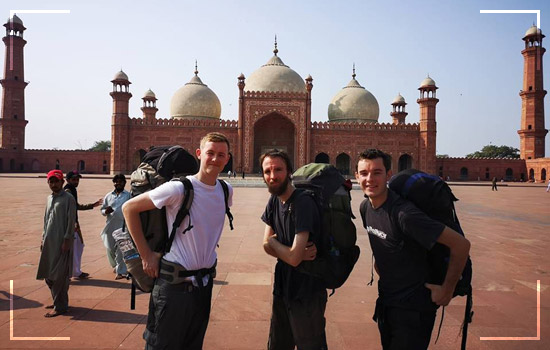
Foreigner Tourist Badshahi Mosque
- Dress Modestly:The mosque is a religious site, so modest dress is a must. For ladies a dupatta or scarf is recommended.
- Footwear:While entering inside one has to take off shoes. Wear comfortable sandals which can be easily removed.
- Photography:During the day the best angles are found near the courtyard and minarets.
- At night the mosque looks royal under flood lights. Carry a tripod if you want to take professional shots.
- Local Guides:Local guides are available at the entrance. Hire a guide, he will tell you small historical details which you will not get anywhere else online.
- Security:There is proper security in the mosque. But keep your passport and cash safe.
Food Recommendation:
Have dinner in Lahore Food Street behind the Mosque. Night view of Badshahi Mosque + traditional food is a perfect combo.
Final Review – My Honest Thoughts on Badshahi Mosque
I have seen different mosques and cathedrals around the world, but the charm I felt at Badshahi Mosque in Pakistan was unique. This mosque is not just a place of worship but a museum of Mughal history.
- If you want to see Badshahi Mosque, then this is the best preserved site.
- If you want a spiritual experience, then visit on Eid prayers or Friday prayers.
- If you are fond of photography and culture, then take a combo of night view and Lahore Food Street.
“For those who are not only planning to see Lahore but want to explore the entire country, I highly recommend reading my Best Time to Visit Pakistan – Full Travel Guide.”
I honestly recommend that people who are travelling to Pakistan from UK, USA or Europe, Badshahi Masjid Lahore should be on top in their bucket list.
This place gives you history, culture, religion and beauty all at the same time. Despite being built in 1673, even today this mosque is a living symbol of Lahore and Pakistan.
And the most important thing – entry is free. Meaning you are getting a priceless cultural heritage experience without spending a single rupee.
Final Words:
Badshahi Mosque Lahore is not just a monument but an emotional journey. When you stand in its courtyard, you feel as if the ghosts of the Mughal era are still alive here. If you come to Pakistan and miss this mosque, then understand that your trip was wasted.
FAQ Section
Q1: Where is Badshahi Mosque located?
A: Badshahi Mosque is located in the Walled City of Lahore, Pakistan, right in front of Lahore Fort and near Hazuri Bagh. It is one of the most famous Mughal-era monuments and a must-visit landmark for tourists from USA, UK, and Europe.
Q2: Who built the Badshahi Mosque and when?
A: The Badshahi Mosque was built in 1673 by Mughal Emperor Aurangzeb. It is a masterpiece of Mughal architecture and one of the largest mosques in the world.
Q3: What is the Badshahi Mosque entry fee?
A: The entry to Badshahi Mosque is completely free. Visitors from Pakistan and foreign tourists do not need to pay any fee to explore this beautiful landmark.
Q4: What are the Badshahi Mosque timings and visiting hours?
A: Badshahi Mosque is usually open from early morning (Fajr prayers) until evening (Maghrib prayers). Tourists can visit throughout the day, but early morning and late afternoon are considered the best visiting hours.
Q5: What is the best time to visit Badshahi Mosque Lahore?
A: The best time to visit Badshahi Mosque is during winter (Nov–Feb) and spring (March–April). Morning and sunset hours are perfect for photography and sightseeing.
Q6: Is Badshahi Mosque safe for foreign tourists?
A: Yes, Badshahi Mosque is safe for tourists from USA, UK, and Europe. Security is strict, and local people are very welcoming. Modest dressing is recommended as it is a religious site.
Q7: Can I take photos inside Badshahi Mosque?
A: Yes, photography is allowed inside and outside Badshahi Mosque. The mosque’s night view under lights is especially popular for photography.
Q8: What festivals are celebrated at Badshahi Mosque?
A: Major Islamic festivals like Eid at Badshahi Mosque are celebrated with huge gatherings. On Eid day, tens of thousands of people offer prayers in the grand courtyard.
Q9: Why is Badshahi Mosque famous?
A: Badshahi Mosque is famous for its massive size, Mughal architecture, rich history, and cultural importance. It is also featured on Pakistani currency, making it a national symbol.
Q10: How many people can pray in Badshahi Mosque at one time?
A: The mosque has the capacity to accommodate more than 100,000 worshipers in its courtyard and prayer halls, making it one of the largest mosques in the world.